Eating My Skincare · Episode 01
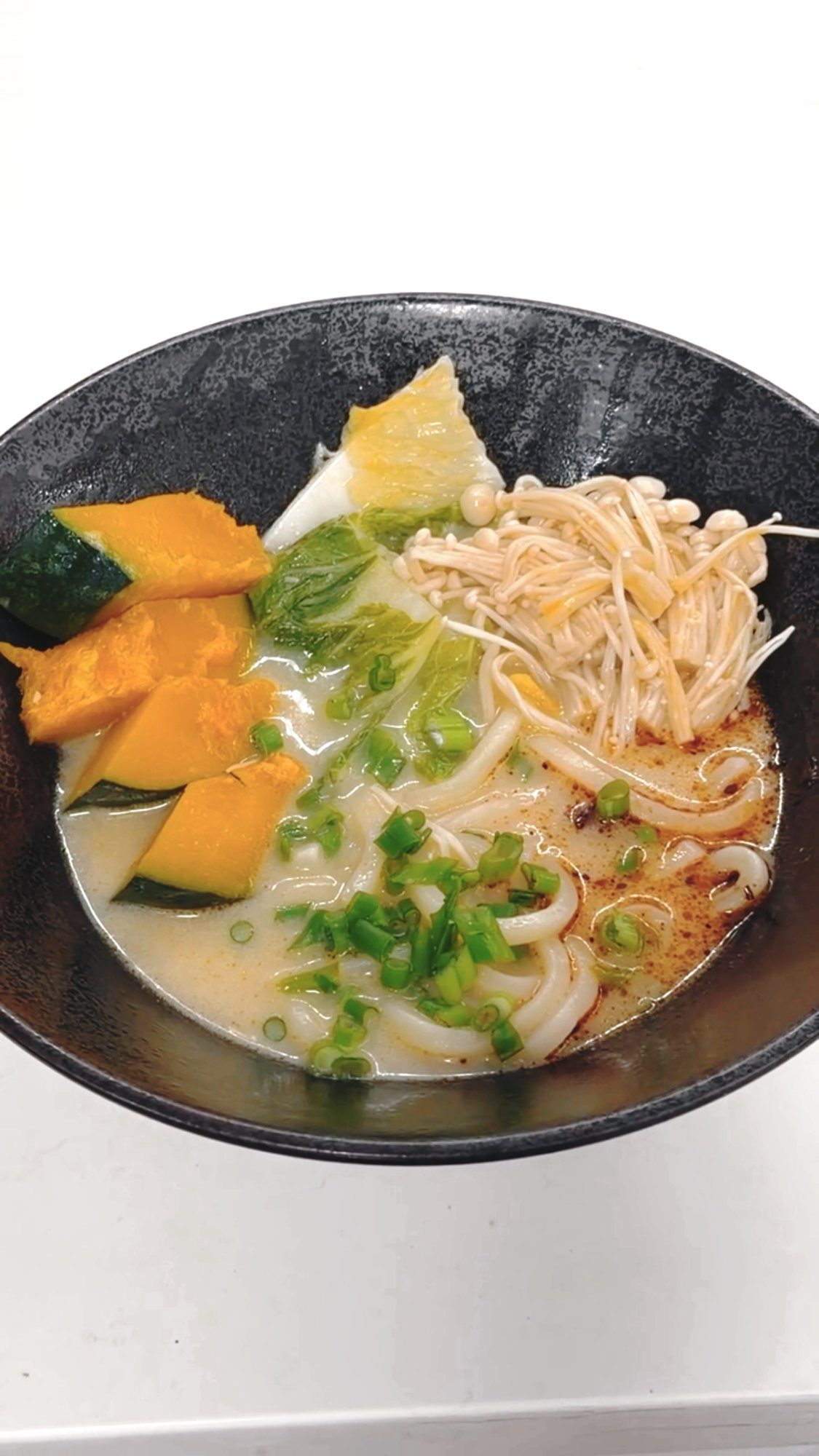
Miso Coconut
Brothy Soup
This was the recipe that started everything. I'd been deep in a rabbit hole about the gut-skin connection - how the bacteria in your gut directly affects inflammation in your skin - and I kept coming back to miso. It's one of the most probiotic-rich foods you can eat, and it's also just one of my all-time comfort ingredients growing up.
The coconut milk was the experiment. I wanted something that felt rich and nourishing without being heavy, and the combination of miso and coconut ended up being so much better than I expected. Add kabocha for sweetness and beta-carotene, ginger to bring the anti-inflammatory heat, and you've got a bowl that genuinely works from the inside out.
This is the kind of soup I make when my skin feels dull or reactive. It's cozy, it's Japanese, and it tastes like something my grandma would have approved of.
Miso
Gut-skin axis
Probiotic-rich. Your gut and your skin are more connected than people think - this is the ingredient that started the whole series for me.
Coconut milk
Barrier support
Healthy fats and lauric acid. Think of it as ceramides you can eat - it helps keep your skin barrier intact and moisturized from the inside.
Kabocha squash
Brightening
Beta-carotene and Vitamin C in one ingredient. Great for skin brightness and fighting the kind of dullness that creeps in during winter.
Ginger
Anti-inflammatory
Reduces puffiness and improves circulation. I add it to almost everything - it's one of those ingredients that just makes everything work better.
What you'll need
The broth
The bowl
Garnish
How to make it
Build the broth base
In a large pot over medium heat, combine the chicken broth, coconut milk, water, and hondashi packet. Stir to combine and bring to a gentle simmer.
Don't let it boil hard - a gentle simmer keeps the coconut milk from splitting and the broth silky.
Add the aromatics
Stir in the grated ginger, sesame oil, and chili crisp. Let them bloom in the broth for 2–3 minutes.
Add kabocha and vegetables
Add the cubed kabocha squash and napa cabbage to the pot. Simmer for 10–15 minutes until the kabocha is tender when pierced with a fork.
Dissolve the miso
Ladle a small amount of broth into a separate bowl. Whisk in the miso paste until fully dissolved, then stir it back into the pot. Do not boil after adding miso - high heat kills the probiotics.
This is the most important step. Always dissolve miso separately and add it off the boil to preserve all the gut-health benefits.
Add noodles and mushrooms
Add the udon noodles and enoki mushrooms. Cook for 2–3 minutes until the noodles are warmed through and the mushrooms are just tender.
Garnish and serve
Ladle into bowls and top with chopped green onion and a squeeze of fresh lime. Serve immediately.